
The Importance of Periodic Electrocardiograms in Individuals with Metabolic Disorders: A Policy Brief
DOI:
https://doi.org/10.31661/gmj.v15i.4206Keywords:
Metabolic Disorders; Electrocardiography; QT Interval; Sudden Cardiac Death; Risk AssessmentAbstract
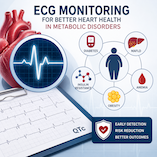
Metabolic disorders, including obesity, type 2 diabetes, metabolic dysfunction-associated fatty liver disease (MAFLD), anemia, and insulin resistance, are increasingly prevalent and represent a major contributor to cardiovascular morbidity and mortality. Emerging evidence indicates that these conditions are associated with prolongation of the corrected QT (QTc) interval, a well-established marker of ventricular arrhythmias and sudden cardiac death. Individuals with metabolic disorders have a significantly higher risk of life-threatening arrhythmias, even in the absence of known cardiovascular disease. Insulin resistance, a central component of cardiometabolic dysfunction, has also been linked to QT interval prolongation. Despite this growing body of evidence, QTc monitoring is not currently included in routine clinical guidelines for the management of metabolic disorders. Electrocardiography (ECG) is a low-cost and widely accessible diagnostic tool that enables early identification of high-risk individuals and supports timely preventive interventions. Routine implementation of baseline and annual ECG-based QTc monitoring has the potential to reduce sudden cardiac death, improve cardiovascular risk stratification, and decrease healthcare costs associated with acute cardiac events. This policy brief advocates for the adoption of a national QTc monitoring strategy as a scalable and cost-effective approach to improving cardiovascular outcomes in patients with metabolic disorders.
References
Hyun HK, Cheon JH. Metabolic disorders and inflammatory bowel diseases. Gut Liver. 2025;19(3):307-17.
https://doi.org/10.5009/gnl240316
PMid:39774122 PMCid:PMC12070218
Mohammad KA, Hamidreza R, Rahil G, Mohammad T, Nizal S, Masoumeh S, et al. Association of prolonged PR and QTc intervals with cardiovascular events and mortality: the Isfahan cohort study. BJSTR MS. 2020;29(5).
https://doi.org/10.26717/BJSTR.2020.29.004858
Naderi A, Farjam M, Mojarrad SM, Abdollahi A, Alkamel A, Keshavarzian O, et al. The association between nonalcoholic fatty liver disease and corrected QT interval prolongation among generally healthy Iranian population: Fasa cohort study. Clin Cardiol. 2023;46(6):615-21.
https://doi.org/10.1002/clc.24015
PMid:37016545 PMCid:PMC10270276
Bazmi S, Mohammadi Z, Motazedian M, Tabrizi R. Is anaemia associated with QTc prolongation? BMJ Open. 2025;15(9).
https://doi.org/10.1136/bmjopen-2025-101021
PMid:40940052 PMCid:PMC12519370
Yazdanpanah MH, Bahramali E, Naghizadeh MM, Farjam M, Mobasheri M, Dadvand S. Different body parts' fat mass and corrected QT interval. BMC Cardiovasc Disord. 2021;21(1):277.
https://doi.org/10.1186/s12872-021-02095-2
PMid:34090333 PMCid:PMC8178852
Mobasheri-Shiri M, Bazmi S, Soleimani-Meigoli MS, Karimimoghadam Z, Tabrizi R, Farjam M. The association between insulin resistance and QT interval: systematic review and meta-analysis. BMC Cardiovasc Disord. 2025;28(25).
https://doi.org/10.1186/s12872-025-04593-z
PMid:40022015 PMCid:PMC11869589
Published
How to Cite
Issue
Section
License
Copyright (c) 2026 Galen Medical Journal

This work is licensed under a Creative Commons Attribution 4.0 International License.