
Effects of Botanical Supplementation on Benzene-Induced Hematological, Histopathological, and Molecular Alterations in Rats
DOI:
https://doi.org/10.31661/gmj.v15i.4246Abstract
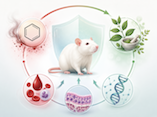
Background: Leukemia is a hematological malignancy characterized by uncontrolled proliferation of immature white blood cells, influenced by both genetic and environmental factors. Benzene is a recognized leukemogenic agent associated with hematopoietic toxicity following prolonged exposure. This study investigated the protective effects of Withania somnifera (ashwagandha), Camellia sinensis (green tea), and curcumin against benzene-induced leukemic alterations in rats. Materials and Methods: Adult male albino rats received intravenous benzene (99.9%) every two days for 3 weeks to induce leukemic changes. Following induction, rats were divided into three groups (n=6/group), 1:a combination-treated group receiving oral Withania somnifera (200 mg/kg), Camellia sinensis extract (250 mg/kg), and curcumin (200 mg/kg) daily for 30 days; 2:a Withania somnifera-treated group receiving 300 mg/kg daily for 30 days; and 3:a control group. Hematological, histopathological, and molecular analyses were performed using blood, bone marrow, spleen, and liver samples. Results: Both treatment regimens reduced several benzene-induced hematological, histopathological, and molecular alterations. Hematological parameters in treated groups were maintained within near-normal ranges. Histopathological examination demonstrated partial preservation of liver and spleen architecture in both treatment groups, with reduced inflammatory and degenerative changes compared with untreated benzene-exposed rats. Molecular analysis showed restoration of Nrf2 expression and modulation of Caspase-3 expression following treatment, particularly in the combination-treated group. Blast cell counts were reduced in both treatment groups compared with untreated benzene-exposed animals. Conclusion: Withania somnifera, alone or in combination with curcumin and green tea extract, demonstrated protective effects against benzene-induced hematological, histopathological, and molecular alterations in rats. The combination treatment showed greater improvement in molecular markers associated with oxidative stress and apoptosis. These findings support further investigation of these botanical compounds as potential supportive agents in leukemia-related disorders.
References
Bispo JAB, Pinheiro PS, Kobetz EK. Epidemiology and etiology of leukemia and lymphoma. Cold Spring Harb Perspect Med. 2020;10(6):a034819.
https://doi.org/10.1101/cshperspect.a034819
PMid:31727680 PMCid:PMC7263093
Whiteley AE, Price TT, Cantelli G, Sipkins DA. Leukaemia: a model metastatic disease. Nat Rev Cancer. 2021;21(7):461-475.
https://doi.org/10.1038/s41568-021-00355-z
PMid:33953370 PMCid:PMC8722462
Smith MT. Advances in understanding benzene health effects and susceptibility. Annu Rev Public Health. 2010;31:133-148.
https://doi.org/10.1146/annurev.publhealth.012809.103646
PMid:20070208 PMCid:PMC4360999
Paul T, Paul T, Katwal S, Aroori P, Dawer P, Bhatia H, et al. Benzene and human health: a comprehensive review of carcinogenic risks, mechanisms, and preventive strategies. Ann Med Surg. 2025;87(11):7206.
https://doi.org/10.1097/MS9.0000000000003806
PMid:41180735 PMCid:PMC12578042
McHale CM, Zhang L, Smith MT. Current understanding of the mechanism of benzene-induced leukemia in humans: implications for risk assessment. Carcinogenesis. 2012;33(2):240-252.
https://doi.org/10.1093/carcin/bgr297
PMid:22166497 PMCid:PMC3271273
Nobari H, Parnian-Khajehdizaj N, Johnson K, Ramos-Álvarez JJ. Ashwagandha (Withania somnifera): a comprehensive narrative review of its role in enhancing physical performance and health. Nutr Metab. 2026;23(1):39.
https://doi.org/10.1186/s12986-026-01093-5
PMid:41715115 PMCid:PMC13032348
Mikulska P, Malinowska M, Ignacyk M, Szustowski P, Nowak J, Pesta K, et al. Ashwagandha (Withania somnifera): current research on the health-promoting activities: a narrative review. Pharmaceutics. 2023;15(4):1057.
https://doi.org/10.3390/pharmaceutics15041057
PMid:37111543 PMCid:PMC10147008
El-Saadony MT, Yang T, Korma SA, Sitohy M, Abd El-Mageed TA, Selim S, et al. Impacts of turmeric and its principal bioactive curcumin on human health: pharmaceutical, medicinal, and food applications: a comprehensive review. Front Nutr. 2023;9:1040259.
https://doi.org/10.3389/fnut.2022.1040259
PMid:36712505 PMCid:PMC9881416
Sharifi-Rad J, Rayess YE, Rizk AA, Sadaka C, Zgheib R, Zam W, et al. Turmeric and its major compound curcumin on health: bioactive effects and safety profiles for food, pharmaceutical, biotechnological and medicinal applications. Front Pharmacol. 2020;11:1021.
https://doi.org/10.3389/fphar.2020.01021
PMid:33041781 PMCid:PMC7522354
Filippini T, Malavolti M, Borrelli F, Izzo AA, Fairweather-Tait SJ, Horneber M, et al. Green tea (Camellia sinensis) for the prevention of cancer. Cochrane Database Syst Rev. 2020;2020(3):CD005004.
https://doi.org/10.1002/14651858.CD005004.pub3
PMid:32118296 PMCid:PMC7059963
Liu J, Xing J, Fei Y. Green tea (Camellia sinensis) and cancer prevention: a systematic review of randomized trials and epidemiological studies. Chin Med. 2008;3:12.
https://doi.org/10.1186/1749-8546-3-12
PMid:18940008 PMCid:PMC2577676
Akanni EO, Adedeji AL, Adedosu OT, Olaniran OI, Oloke JK. Chemopreventive and anti-leukemic effects of ethanol extracts of Moringa oleifera leaves on Wistar rats bearing benzene-induced leukemia. Curr Pharm Biotechnol. 2014;15(6):563-568.
https://doi.org/10.2174/1389201015666140717090755
PMid:25051949
Rehan T, Tahir A, Sultan A, Alabbosh KF, Waseem S, Ul-Islam M, et al. Mitigation of benzene-induced haematotoxicity in Sprague Dawley rats through plant-extract-loaded silica nanobeads. Toxics. 2023;11(10):865.
https://doi.org/10.3390/toxics11100865
PMid:37888715 PMCid:PMC10610980
Al-Attar AM, Elnaggar MHR, Almalki EA. Physiological study on the influence of some plant oils in rats exposed to a sublethal concentration of diazinon. Saudi J Biol Sci. 2018;25(4):786-796.
https://doi.org/10.1016/j.sjbs.2016.11.002
PMid:29740245 PMCid:PMC5936871
Russo M, Spagnuolo C, Tedesco I, Russo GL. Phytochemicals in cancer prevention and therapy: truth or dare? Toxins. 2010;2(4):517-551.
https://doi.org/10.3390/toxins2040517
PMid:22069598 PMCid:PMC3153217
Talib WH, Alsalahat I, Daoud S, Abutayeh RF, Mahmod AI. Plant-derived natural products in cancer research: extraction, mechanism of action, and drug formulation. Molecules. 2020;25(22):5319.
https://doi.org/10.3390/molecules25225319
PMid:33202681 PMCid:PMC7696819
Patel SB, Rao NJ, Hingorani LL. Safety assessment of Withania somnifera extract standardized for withaferin A: acute and sub-acute toxicity study. J Ayurveda Integr Med. 2016;7(1):30-37.
https://doi.org/10.1016/j.jaim.2015.08.001
PMid:27297507 PMCid:PMC4910650
Ola OS, Sofolahan TA. A monoterpene antioxidant, linalool, mitigates benzene-induced oxidative toxicities on hematology and liver of male rats. Egypt J Basic Appl Sci. 2021;8(1):39-53.
https://doi.org/10.1080/2314808X.2021.1898141
Elnasharty MMM, Elwan AM, Elhadidy ME, Mohamed MA, Abd El-Rahim AH, Hafiz NA, et al. Various investigations of ameliorative role of Ashwagandha seeds (Withania somnifera) against amoxicillin toxicity. Toxicol Res. 2024;13(3):tfae091.
https://doi.org/10.1093/toxres/tfae091
PMid:38873278 PMCid:PMC11167568
David EM, Pacharinsak C, Jampachaisri K, Hagan L, Marx JO. Use of ketamine or xylazine to provide balanced anesthesia with isoflurane in C57BL/6J mice. J Am Assoc Lab Anim Sci. 2022;61(5):457-467.
https://doi.org/10.30802/AALAS-JAALAS-21-000125
PMid:35940848 PMCid:PMC9536832
Unalli OS, Ozarda Y. Stability of hematological analytes during 48 hours storage at three temperatures using Cell-Dyn hematology analyzer. J Med Biochem. 2021;40(3):252-260.
https://doi.org/10.5937/jomb0-27945
PMid:34177369 PMCid:PMC8199497
Shetty JK, Babu HF, Hosapatna LKP. Histomorphological assessment of formalin versus nonformalin fixatives in diagnostic surgical pathology. J Lab Physicians. 2020;12(4):271-275.
https://doi.org/10.1055/s-0040-1722546
PMid:33390677 PMCid:PMC7773438
Davis L, Kuttan G. Effect of Withania somnifera on DMBA induced carcinogenesis. J Ethnopharmacol. 2001;75(2-3):165-168.
https://doi.org/10.1016/S0378-8741(00)00404-9
PMid:11297845
Rodríguez A, Duyvejonck H, Van Belleghem JD, Gryp T, Van Simaey L, Vermeulen S, et al. Comparison of procedures for RNA-extraction from peripheral blood mononuclear cells. PLoS One. 2020;15(2):e0229423.
https://doi.org/10.1371/journal.pone.0229423
PMid:32084228 PMCid:PMC7034890
Pereira-Gómez M, Fajardo Á, Echeverría N, López-Tort F, Perbolianachis P, Costábile A, et al. Evaluation of SYBR Green real time PCR for detecting SARS-CoV-2 from clinical samples. J Virol Methods. 2021;289:114035.
https://doi.org/10.1016/j.jviromet.2020.114035
PMid:33285190 PMCid:PMC7831559
Wang H, Lu J, Mandel JA, Zhang W, Schwalbe M, Gorka J, et al. Patient-derived mutant forms of NFE2L2/NRF2 drive aggressive murine hepatoblastomas. Cell Mol Gastroenterol Hepatol. 2021;12(1):199-228.
https://doi.org/10.1016/j.jcmgh.2021.02.004
PMid:33618031 PMCid:PMC8102178
Tharakan A, Shukla H, Benny IR, Tharakan M, George L, Koshy S. Immunomodulatory effect of Withania somnifera (Ashwagandha) extract: a randomized, double-blind, placebo-controlled trial with an open label extension on healthy participants. J Clin Med. 2021;10(16):3644.
https://doi.org/10.3390/jcm10163644
PMid:34441940 PMCid:PMC8397213
Zareifar S, Farahmand Far MR, Golfeshan F, Cohan N. Changes in platelet count and mean platelet volume during infectious and inflammatory disease and their correlation with ESR and CRP. J Clin Lab Anal. 2014;28(3):245-248.
https://doi.org/10.1002/jcla.21673
PMid:24478177 PMCid:PMC6807431
Faiola B, Fuller ES, Wong VA, Recio L. Gene expression profile in bone marrow and hematopoietic stem cells in mice exposed to inhaled benzene. Mutat Res. 2004;549(1-2):195-212.
https://doi.org/10.1016/j.mrfmmm.2003.12.022
PMid:15120971
Mohmmed Hegab AM, Hassanin SO, Mekky RH, Abuzahrah SS, Hamza AA, Talaat IM, et al. Withania somnifera ameliorates doxorubicin-induced nephrotoxicity and potentiates its therapeutic efficacy targeting SIRT1/Nrf2, oxidative stress, inflammation, and apoptosis. Pharmaceuticals. 2025;18(2):248.
https://doi.org/10.3390/ph18020248
PMid:40006061 PMCid:PMC11859695
Maurya SK, Tewari M, Sharma B, Shukla HS. Expression of procaspase 3 and activated caspase 3 and its relevance in hormone-responsive gallbladder carcinoma chemotherapy. Korean J Intern Med. 2013;28(5):573-578.
https://doi.org/10.3904/kjim.2013.28.5.573
PMid:24009453 PMCid:PMC3759763
Weaver CV, Liu SP, Lu JF, Lin BS. The effects of benzene exposure on apoptosis in epithelial lung cells: localization by terminal deoxynucleotidyl transferase-mediated dUTP-biotin nick end labeling (TUNEL) and the immunocytochemical localization of apoptosis-related gene products. Cell Biol Toxicol. 2007;23(3):201-220.
https://doi.org/10.1007/s10565-006-0165-2
PMid:17171516
Singh RK, Bansode FW. Benzene-induced histopathological changes and germ cell population dynamics in testes of Sprague Dawley rats. J Environ Biol. 2011;32(6):687-694.
Barakat AM, El-Razik KAA, El Fadaly HAM, Saleh WM, Ali FAZ, Gouda AA, et al. Parasitological, molecular, and histopathological investigation of the potential activity of propolis and wheat germ oil against acute toxoplasmosis in mice. Pharmaceutics. 2023;15(2):478.
https://doi.org/10.3390/pharmaceutics15020478
PMid:36839800 PMCid:PMC9967381
Lan Q, Zhang L, Li G, Vermeulen R, Weinberg RS, Dosemeci M, et al. Hematotoxicity in workers exposed to low levels of benzene. Science. 2004;306(5702):1774-1776.
https://doi.org/10.1126/science.1102443
PMid:15576619 PMCid:PMC1256034
Jang Y, Eom YJ, Gwak SH, Koh Y, Han J, Rim YA, et al. Advances in the characterization of in vitro-generated red blood cells: from biophysical properties to functional applications. Stem Cell Res Ther. 2025;17:3.
https://doi.org/10.1186/s13287-025-04825-1
PMid:41316485 PMCid:PMC12763939
Gómez Afonso A, Fernandez-Lazaro D, Adams DP, Monserdà-Vilaró A, Fernandez-Lazaro CI. Effects of Withania somnifera (Ashwagandha) on hematological and biochemical markers, hormonal behavior, and oxidant response in healthy adults: a systematic review. Curr Nutr Rep. 2023;12(3):465-477.
https://doi.org/10.1007/s13668-023-00481-0
PMid:37428341 PMCid:PMC10444651
DiNardo CD, Garcia-Manero G, Pierce S, Nazha A, Bueso-Ramos C, Jabbour E, et al. Interactions and relevance of blast percentage and treatment strategy among younger and older patients with acute myeloid leukemia (AML) and myelodysplastic syndrome (MDS). Am J Hematol. 2016;91(2):227-232.
https://doi.org/10.1002/ajh.24252
PMid:26799610 PMCid:PMC5486407
Gui Y, Zhang L, Lv W, Zhang W, Zhao J, Hu X. NFE2L2 variations reduce antioxidant response in patients with Parkinson disease. Oncotarget. 2016;7(10):10756-10764.
https://doi.org/10.18632/oncotarget.7353
PMid:26887053 PMCid:PMC4905436
Silva FFV, Padín-Iruegas ME, Caponio VCA, Lorenzo-Pouso AI, Saavedra-Nieves P, Chamorro-Petronacci CM, et al. Caspase 3 and cleaved caspase 3 expression in tumorogenesis and its correlations with prognosis in head and neck cancer: a systematic review and meta-analysis. Int J Mol Sci. 2022;23(19):11937.
https://doi.org/10.3390/ijms231911937
PMid:36233242 PMCid:PMC9569947
Plappert U, Barthel E, Raddatz K, Seidel HJ. Early effects of benzene exposure in mice: hematological versus genotoxic effects. Arch Toxicol. 1994;68(5):284-290.
https://doi.org/10.1007/s002040050070
PMid:8085938
Willard-Mack CL, Elmore SA, Hall WC, Harleman J, Kuper CF, Losco P, et al. Nonproliferative and proliferative lesions of the rat and mouse hematolymphoid system. Toxicol Pathol. 2019;47(6):665-783.
https://doi.org/10.1177/0192623319867053
PMid:31526133 PMCid:PMC6752743
Nasri H, Ahmadi A, Baradaran A, Nasri P, Hajian S, Pour-Arian A, et al. A biochemical study on ameliorative effect of green tea (Camellia sinensis) extract against contrast media induced acute kidney injury. J Ren Inj Prev. 2013;3(2):47-49.
Kawasaki Y, Hirabayashi Y, Kaneko T, Kanno J, Kodama Y, Matsushima Y, et al. Benzene-induced hematopoietic neoplasms including myeloid leukemia in Trp53-deficient C57BL/6 and C3H/He mice. Toxicol Sci. 2009;110(2):293-306.
https://doi.org/10.1093/toxsci/kfp107
PMid:19478238 PMCid:PMC2708599
Qin R, Deng S, Li S. Research progress on biomarkers and their detection methods for benzene-induced toxicity: a review. Chemosensors. 2025;13(8):312.
Downloads
Published
How to Cite
Issue
Section
License
Copyright (c) 2026 Galen Medical Journal

This work is licensed under a Creative Commons Attribution 4.0 International License.